
This June I had the privilege of presenting at the annual ISTE Conference for the first time and I loved it!
If you’ve ever thought about applying to present at an ISTE Conference – I want to encourage you to go for it. Let me share a little about my experience applying and presenting.
Every summer, ISTE (International Society for Technology in Education) hosts an annual conference for educators from around the world. The conference is huge with an amazing number of different types of sessions: Main stage, Panel, Poster, Research Paper, Playground, Campfire, Interactive and more!
I love that the conference offers so many types of sessions and that presenters must build their sessions with the ISTE Standards in mind, specifically ISTE Standards for Students and ISTE Standards for Educators.
Creating a Session Proposal
The application for presenting at ISTE is extensive. When you apply, ISTE requires that you share your plan for every aspect of your presentation including intended audience, attendee devices, purpose, objective and supporting research. The application also requires that you clearly indicate which of the ISTE Standards your session addresses and include a complete outline of the session.

I chose to present on a topic I’m passionate about: Universal Design for Learning (UDL). UDL helps address the Student Standards especially Empowered Learner and Creative Communicator. UDL also requires teachers to be effective, proactive Designers of learning experiences (Educator Standards).
With my ISTE Standards and topic chosen, I took time to plan the details of the presentation. I called it “UDL in Action the K-12 Classroom” because I planned to share specific examples from teachers and classrooms in my district. I chose to submit the session as an “interactive session” format. I decided to use the ATLAS model by Weston Kieschnik to organize my presentation because ATLAS focuses on engagement and outcomes. I wanted my attendees to actively participate and walk away with something they could use back in their schools. Then I chose the digital tool that would support my goals: Lumio by SMART. Lumio would allow my audience to participate and for me to get feedback from them throughout the session.
Although the application was extensive, it made it so much easier when the time came to actually put my presentation together and get ready for the conference: the plan was already made.
Conference Time
ISTE does a wonderful job of taking care of the presenters before and during the conference. The communication about the conference ahead of time was clear and helpful.
At the conference, I loved that there was a presenter’s room where I could test the presentation setup the day before my session. I was able to test the audio and video. Just knowing what I would expect the next day helped me feel more relaxed about presenting.

On the morning of my presentation I had two different ISTE technology helpers check to see if everything was working and to make sure I was ready to go – another great ISTE support.
I had an 8:30 presentation and was able to get into the room about 45 minutes early to set up. This allowed me to be ready when people started to arrive. I was able to ask them about their role in education and why they’d chosen to come to my session. I love making those connections before and after a presentation.
I also laid out the UDL bookmarks I had made. These contained a QR code and shortened URL to my session resources and to the interactive Lumio presentation. On the other side of the bookmark, I had included one of the three UDL areas (Engagement, Representation, Action & Expression) and the corresponding guidelines and checkpoints.
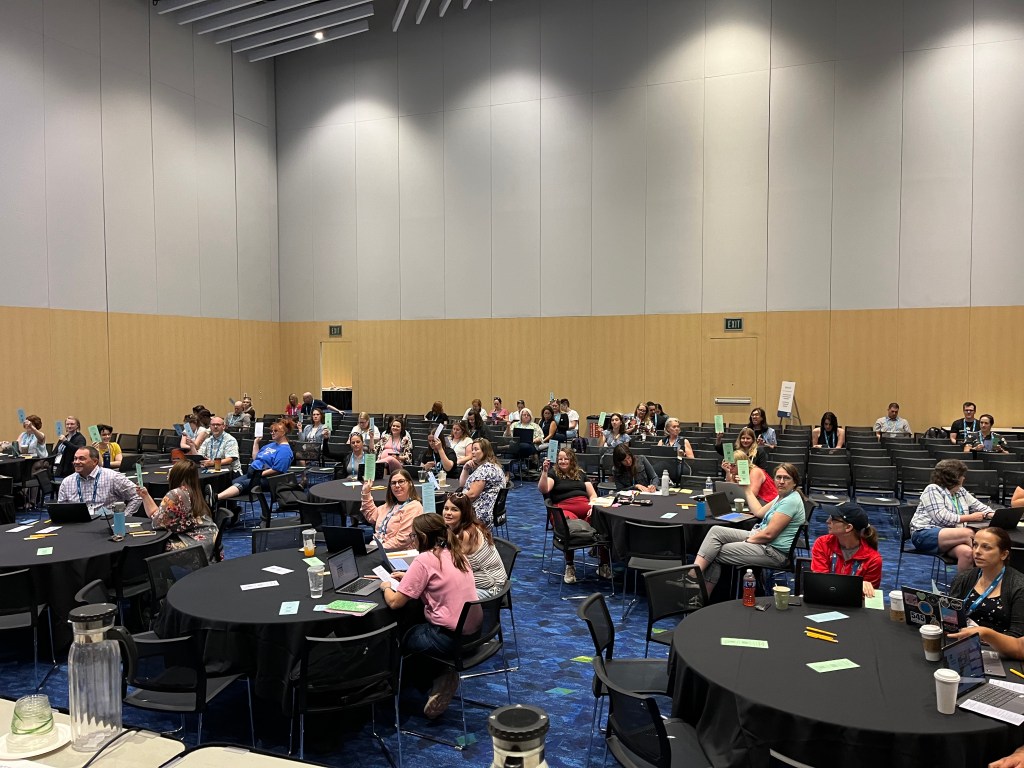
The session went well and I loved how much everyone actively participated. I had built in different types of interaction. Early on I gathered information about their experience with UDL as well as Lumio.
Throughout the presentation as I shared different examples of “UDL in action,” attendees had a variety of ways to identify which of the UDL guidelines these examples included. They could talk to a neighbor, hold up their UDL bookmark, and/or give digital input via the Lumio presentation. Attendees seemed to enjoy interacting in different ways and that they were able to see the slides on their devices via Lumio.

When the presentation was over, several people came up to talk to me and ask more questions – I always consider that a marker of a successful presentation.
I loved presenting at ISTE and sharing my love of UDL and what a difference a UDL mindset and approach can make for all learners.
When applications open for ISTE 2025, I hope you’ll consider sharing the passion and knowledge you have with others. If you want to know more, just reach out!
 Reflections of an Instructional Coach