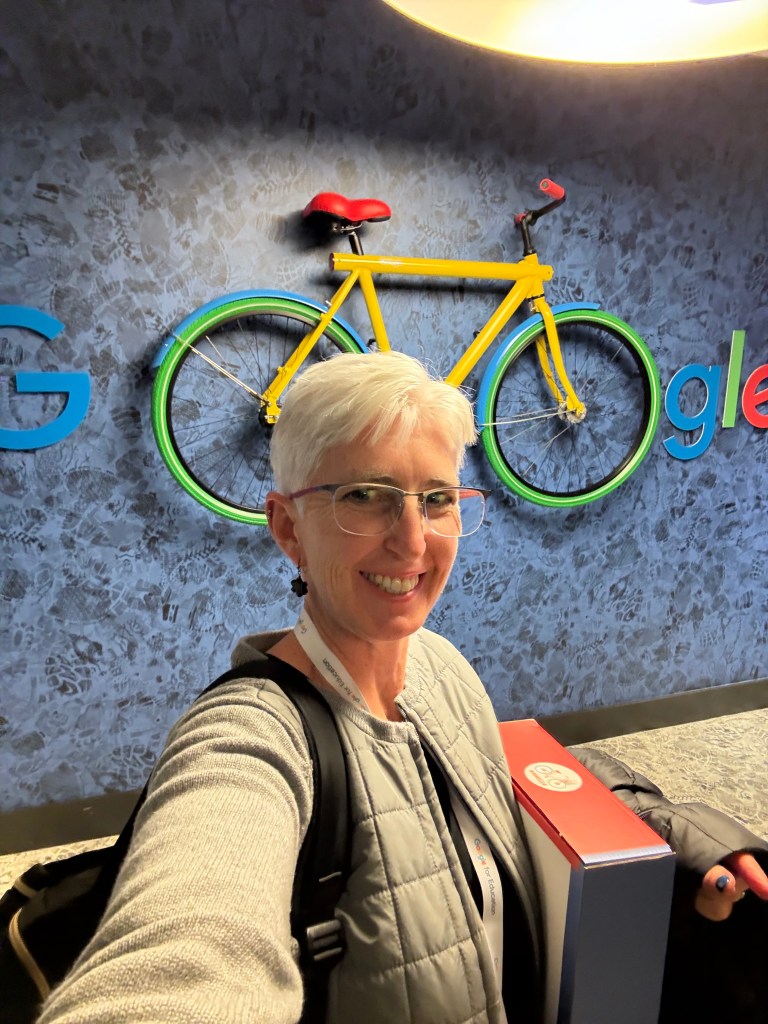
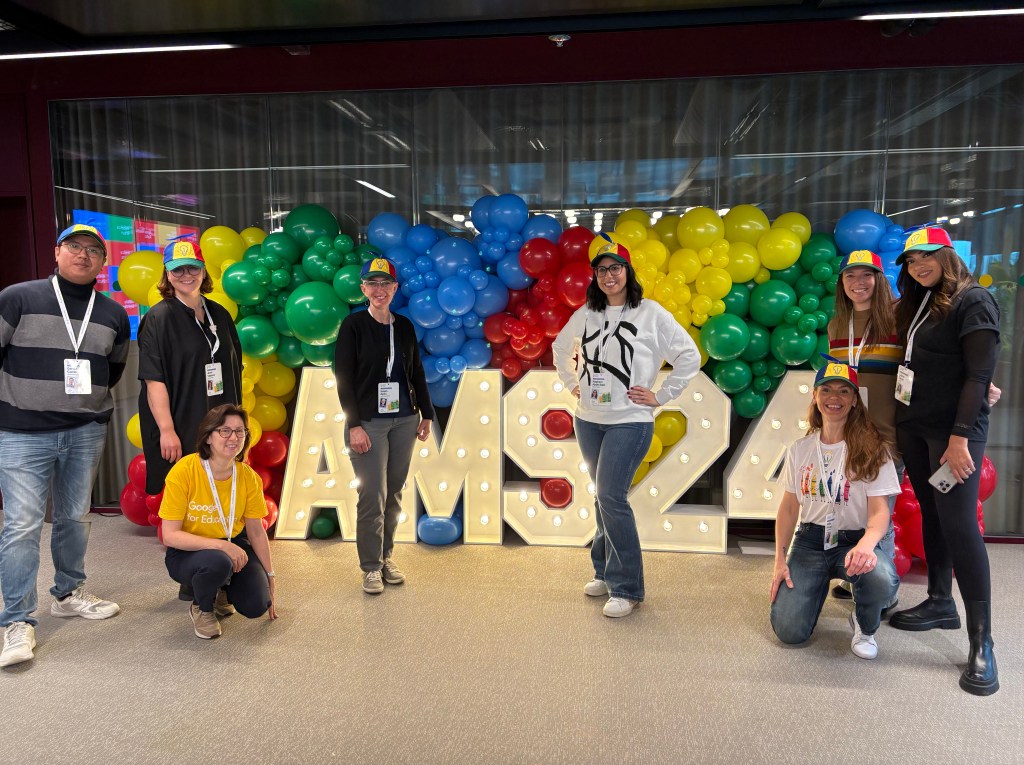
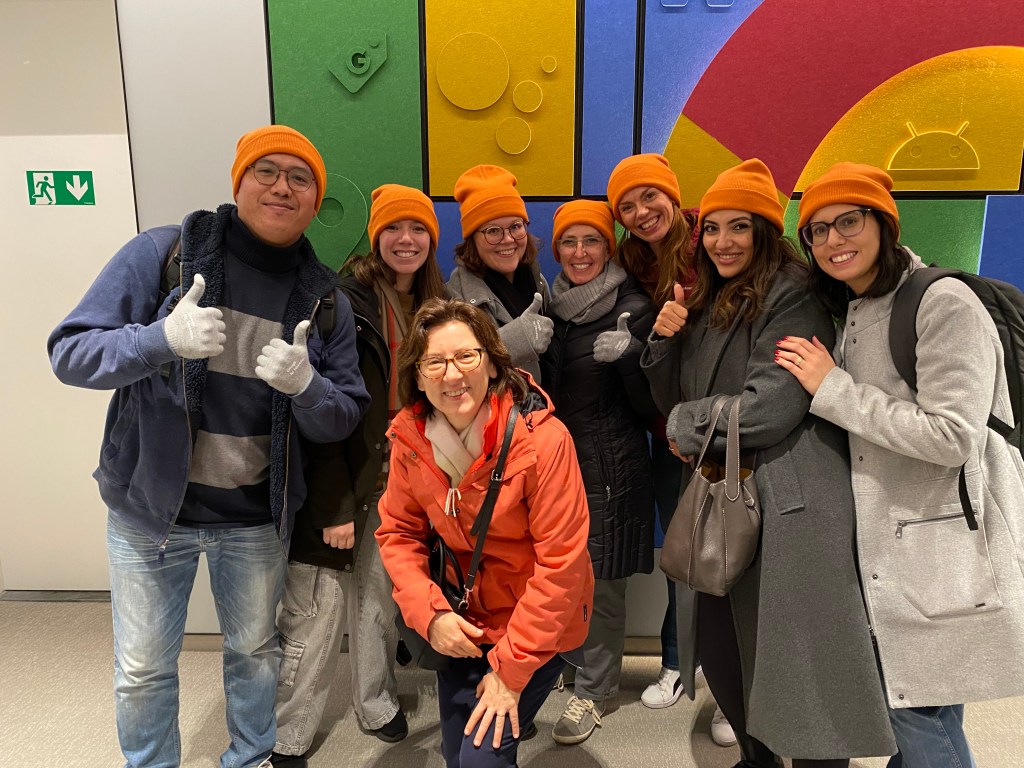
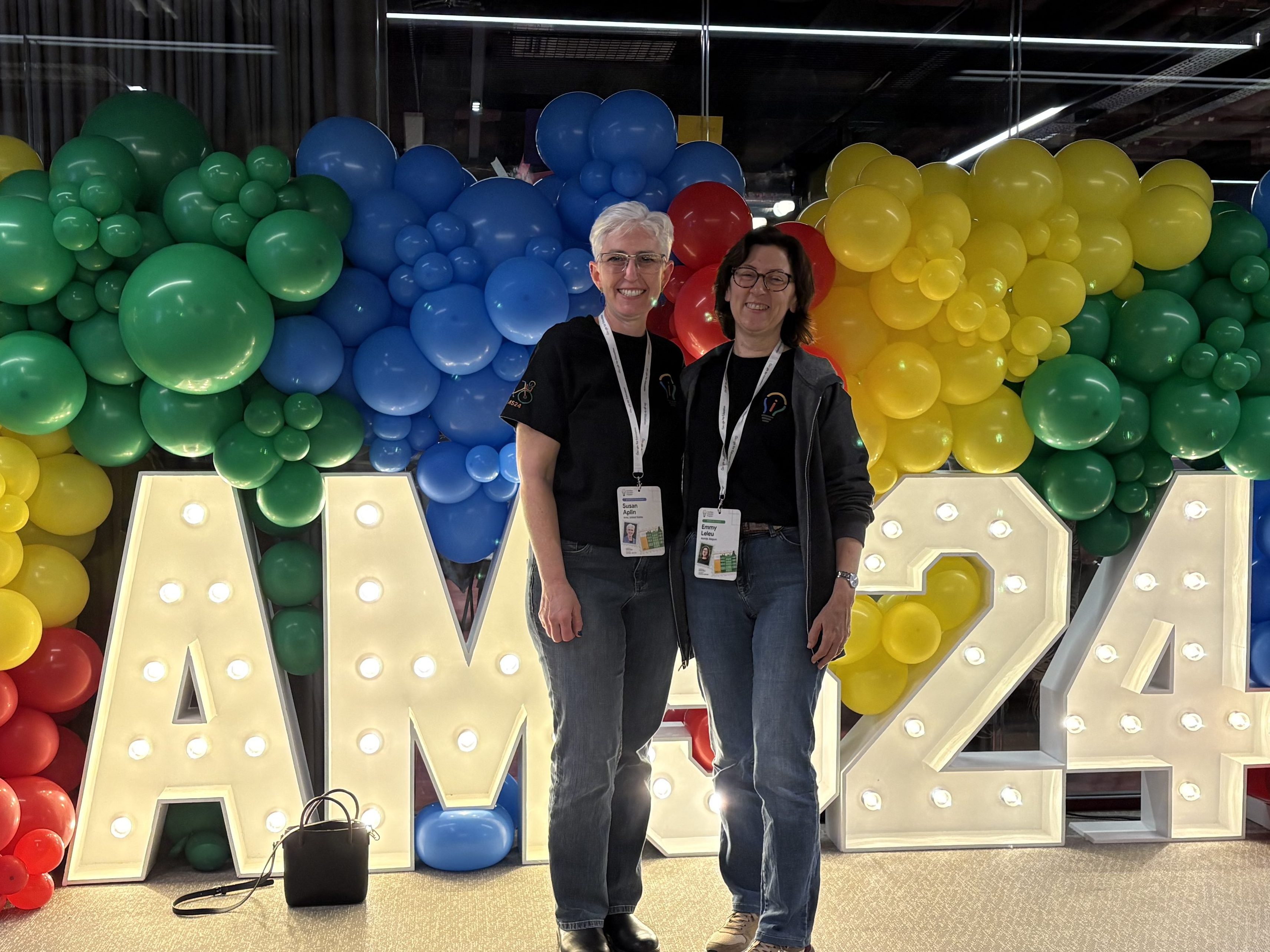
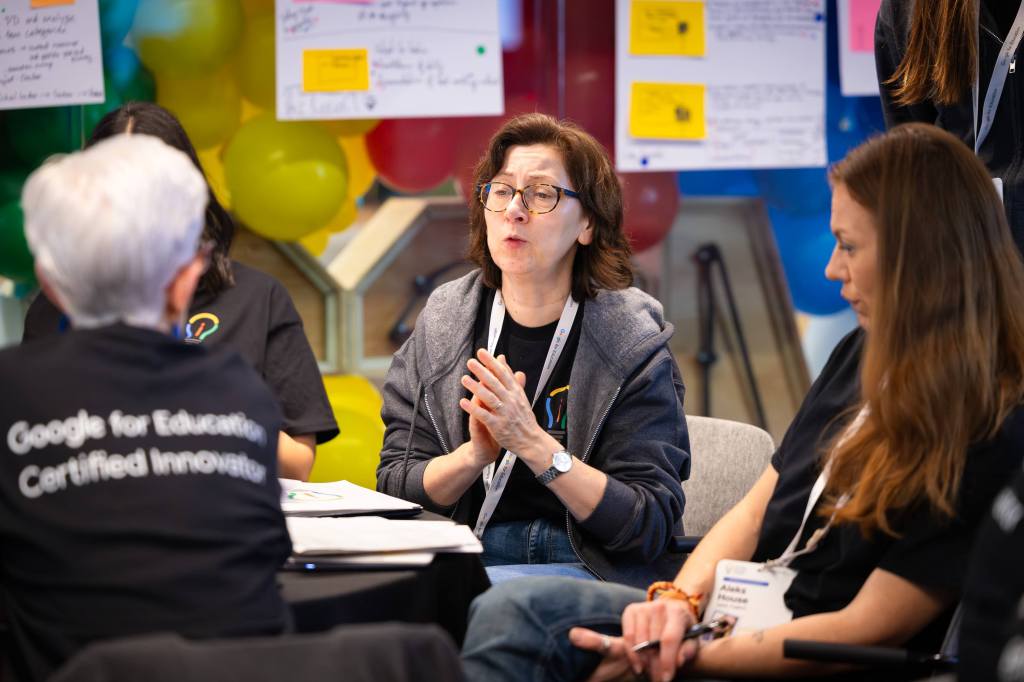
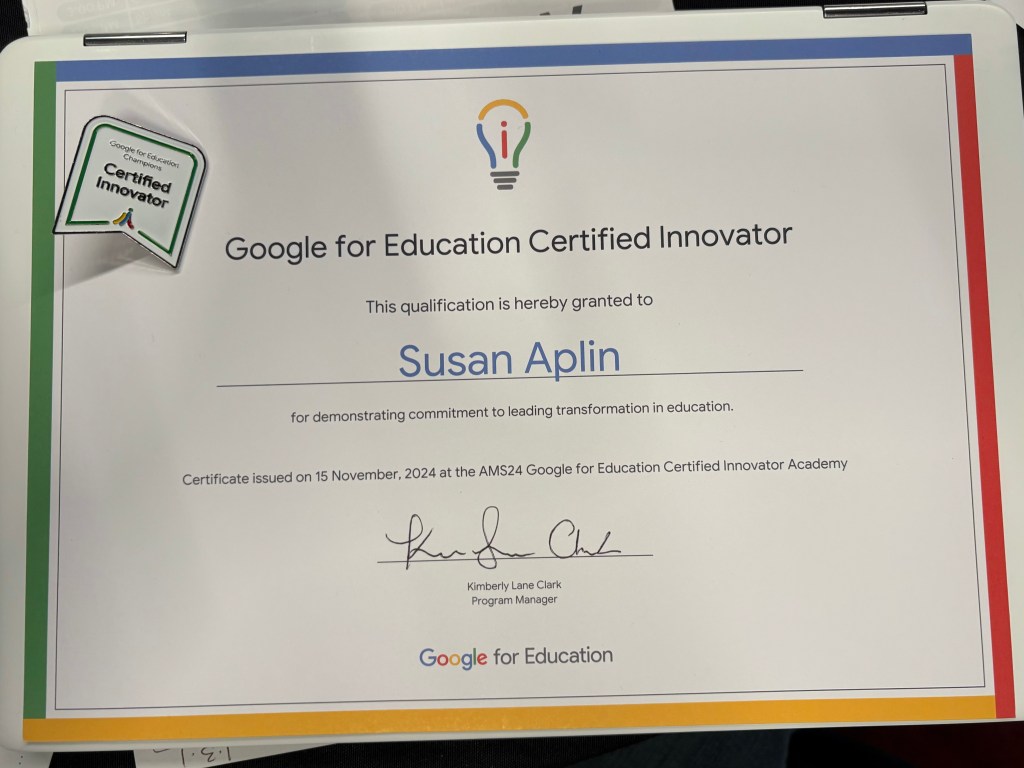
While I’m sad the Academy event is behind us, I’m thrilled that I will continue to work with these phenomenal educators for the next year and hopefully beyond. It was an amazing experience that I am still struggling to put into words.
Of course, we couldn’t have done it without the mentoring of our coach, Emmy Leleu. Emmy, you listened and asked great questions that helped me move from ideas to action. Thank you!
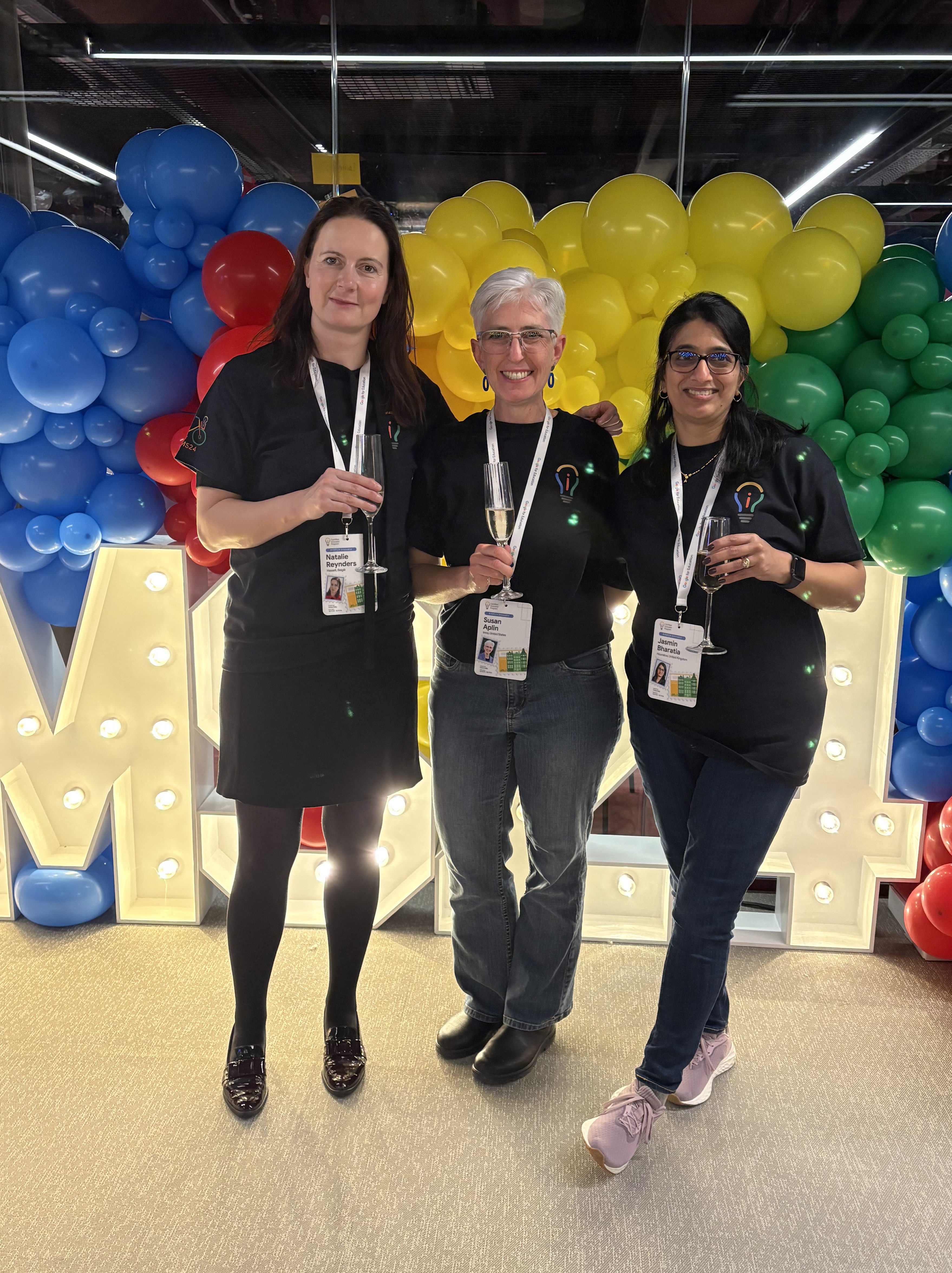
I am lucky to have not one, but TWO Affinity buddies to continue this journey with. Thank you Natalie Reynders & Jasmin Bharatia for your kindness and willingness to share. I can’t wait to see what we do together!
A special thank you to the Canopy team for organizing an incredible event. Each element was so intentional (I keep reviewing my cards!). Thank you Andrew Caffrey for keeping us all on track (despite a left turn) and letting us know we could do this at every step. Thank you Leslie McBeth for guiding us through our design thinking – just the right combination of inspiration and encouragement. Thank you Mia Pledger, Rachel Davey, & Kristina H. for putting together a flawless experience.
I am also grateful that I had the chance to share my passion for hashtag#UDL during a hashtag#SparkCamp talk. I appreciate the conversations it sparked with others. I’ll always talk UDL, just ask!
I have much more to process and write about, but I couldn’t let any more time go by without sharing how thankful I am for this opportunity. I felt appreciated, and empowered; I am ready to keep the work going.
If you know me, you know I love a good education analogy. In fact, I recently told a colleague, I was having a difficult time explaining a work situation, because I couldn’t think of an appropriate analogy.
The flip side of this is that I often see an education connection in the “regular” non-education elements of my life. Here’s a recent example:
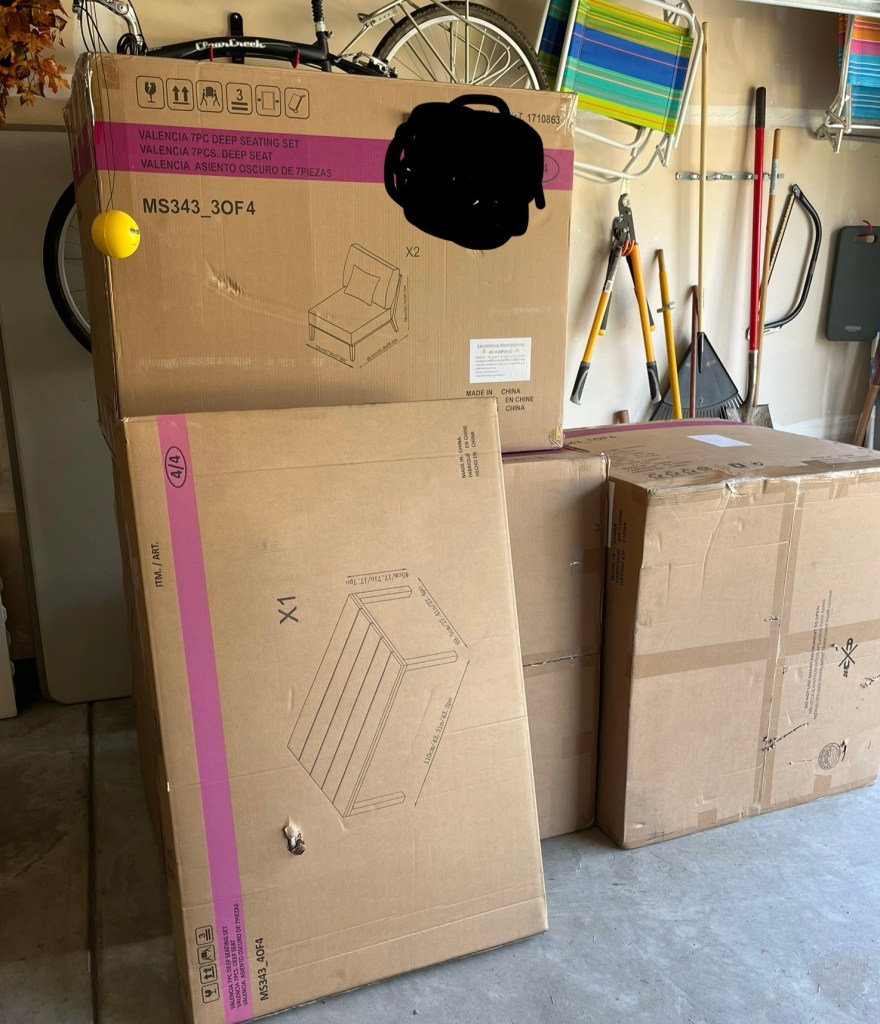
Two months ago I ordered some outdoor furniture and had it delivered. When I placed the order, I had the option to pay extra to have the delivery service unpack the furniture and remove the boxes. I seriously considered it because I wasn’t sure what I was going to do with the boxes. However, I wanted to save the money and figured I was resourceful enough to figure it out.
On delivery day, they put four VERY large boxes in my garage. I unpacked the boxes and moved the furniture to the back porch. But then I was left with these huge boxes that not only wouldn’t fit in my recycling bin, they wouldn’t even fit in my car to take somewhere. What was I going to do with them?
Then my neighbor said to me, “You can cut them up into smaller pieces and slowly recycle them” – and that was my solution as well as my education connection.
What do we do when faced with a task that seems too large to handle? We break it down into manageable pieces.
What do we do with new initiatives, new textbooks, new standards? We break them down into manageable pieces.
What do we do when we have too many demands, too many things on our to do lists? We break them down into manageable pieces.
I often want to deal with the “whole box” all at once, but that’s not always possible.
I need to remind myself that it’s often best to take things one step at a time. This allows me to not get overwhelmed and to better handle any situation I’m faced with – professional and personal. Remembering this also helps me as I coach other teachers and coaches.
I hope that you are able to take one small step in a direction that you want to go. You can do it – break those large tasks into smaller pieces!
PS – I also thought about finding someone who could use the large boxes as they were, but that didn’t happen 🙂
You know how sometimes you hear or read something that just sticks with you and rattles around in your brain? Something that was initially just a random find, but it keeps coming back to you?
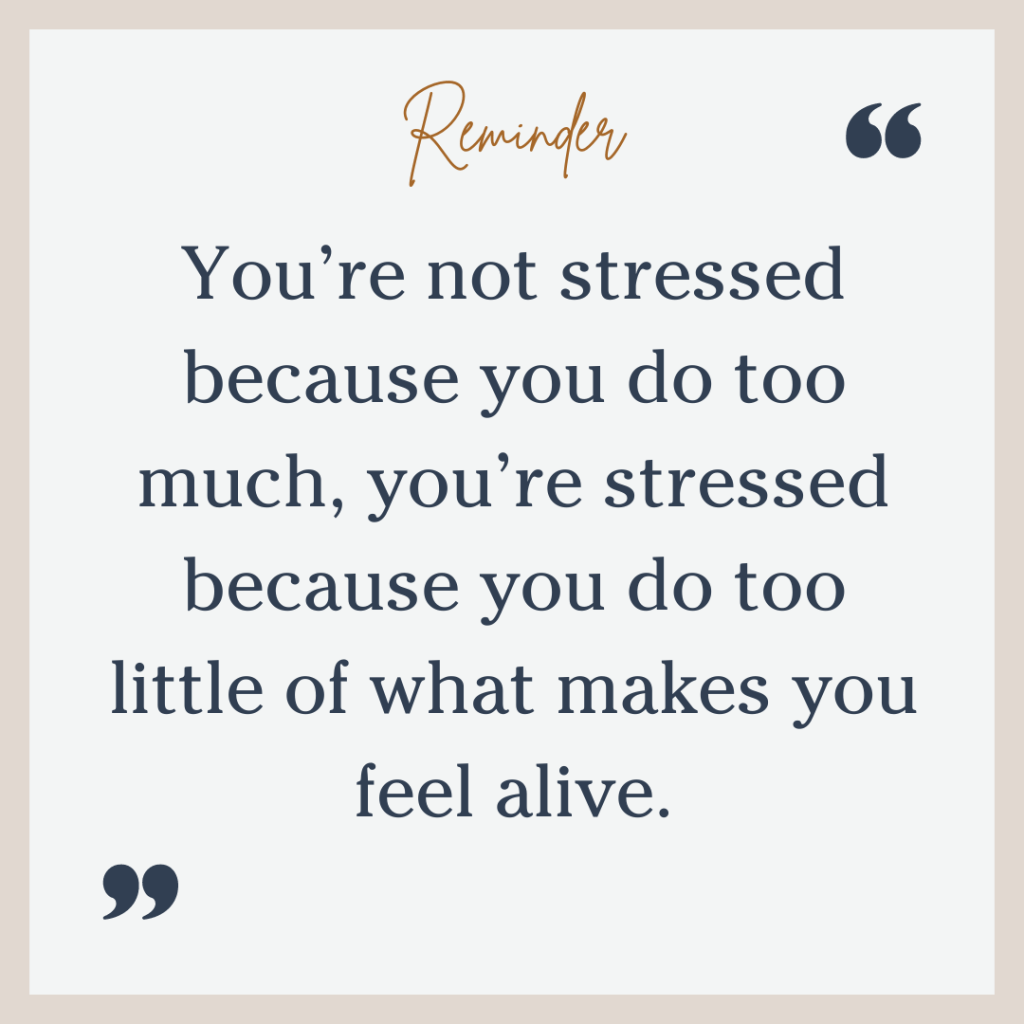
About a month ago I saw a post somewhere that said “You’re not stressed because you do too much, you’re stressed because you do too little of what makes you feel alive.”
The idea really struck me because as an educator, a parent, and just a person, I often am trying to manage stress and anxiety. I’m often trying to find ways to lower my stress and recognize when I’m feeling less stress.
Some answers to dealing with stress seem obvious like trying to avoid stressful situations when you can. But what I really liked about this quote was that it wasn’t about avoiding the things that might give you stress, but about focusing on the things you enjoy and that make you feel alive.
Ever since I read it, I’ve had a new lens to examine how I am choose to spend my time both in and outside of work.
At work there are, of course, things that I will need to do whether I want to or not. Thankfully I really do like most of the things I need to do.
In my current role I have some flexibility with my time, and it could be easy to let certain more mundane tasks (email, vetting, ClassLink tickets, etc.) overwhelm my days.
But with this new (or maybe just renewed) outlook, I have been making a conscious effort to spend more time doing the parts of my job that bring me joy while still accomplishing my goals. I’ve found that spending more time connecting directly with people is at the top of that list.
I coach instructional coaches throughout the district and have been prioritizing going to their schools and talking with them more often. While this brings me more joy, I also think it’s positively impacting them and the work they do.
I’ve been talking to administrators in the schools I support and finding out what’s on their minds and what their priorities are. This too brings more joy to my work.
And I continue to look for ways to get into schools and classrooms so I can connect directly with students and teachers. If you want to feel alive, a classroom is a great place to be!
I’m thankful for work that allows me to find joy and to help others. I recognize that the flexibility and opportunities I have are not something that everyone gets, so I try to appreciate them as much as possible.
I’m also thankful for having options to find joy in my time away from work. I love spending time with friends, seeing my family when I can, being outside in nature, reading, walking, learning and so much more.
I hope that everyone is able to find at least one thing to do this week that makes you feel more alive!
Teaching can be a lonely job. When you shut your classroom door, you are usually the only adult in the classroom. A room full of students is counting on you and it can feel like the weight of the world is on your shoulders. It can feel like you are living on your own island.
When I started teaching at Dutch Fork High School (many moons ago), I didn’t realize how lucky I was to be at a school that valued the power of collaboration and gave us the time and resources we needed. We were never left on our own (in a good way!).
At that time our English and social studies classes were paired at each grade level into Humanities courses. I always had partners in my fellow social studies teachers. We shared the same students and planned collaboratively. I appreciated my partners’ perspectives and appreciated having others to help me as we supported our students.
Our teachers also regularly participated in the Critical Friends Group protocol. We would take turns bringing “problems of practice” to the group and give each other feedback. As a young teacher with so much to learn, I soaked up the feedback. At the time, I didn’t realize that this wasn’t something teachers everywhere did. I didn’t realize the vulnerability it took from everyone involved, especially the veteran teachers.
Moving ahead a few years, I started teaching courses that connected me with different educators in the building. I taught a class called Best Sellers where I collaborated with the school librarians. I taught SAT and ACT prep classes where I planned with a math teacher (we shared the same students). Each of these collaborations gave me important opportunities to see how others approached teaching and get feedback on what I was doing.
When I moved into a high school instructional coaching role, my thought partners grew even more. I worked with administrators and teachers. I co-planned and co-taught with teachers whose subjects I wasn’t familiar with. I had to be vulnerable with my lack of subject knowledge, but also open to sharing my experience with planning effective instruction. Each interaction helped widen my perspective and hone my craft.
When our district started using data teams, we had more opportunities to connect with our colleagues. We’ve now shifted our data teams to PLCs (Professional Learning Communities). Teachers throughout our district have these structures in place to provide them with thought partners and collaborators so that no teacher is an island.
Now as a district instructional leader, I am constantly collaborating with district leaders, school leaders, teachers, etc. I have the privilege of coaching the instructional coaches in our buildings. And while I am there to be a thought partner to them, I also learn and grow each time we meet.
Currently, my primary thought partner is our district Coordinator of Instructional Technology, Carol Lunsford. We work side by side to support instructional technology and instruction in general throughout our district. While sometimes others joke that we “share a brain,” we each bring different experiences and strengths to our collaboration. We have found that by being open and willing to listen, we bring out the best in each other which allows us to be the best for those we support.
I have been lucky to “grow up” as a teacher in a place that provides me with thought partners and encourages vulnerability. But what if you’re a teacher who doesn’t have a place like this?
Educators, if a structure for connection and support isn’t already in place at your school, I encourage you to create your own. Reach out to other “islands” in your school or beyond. You might just find you are actually part of an incredible archipelago.
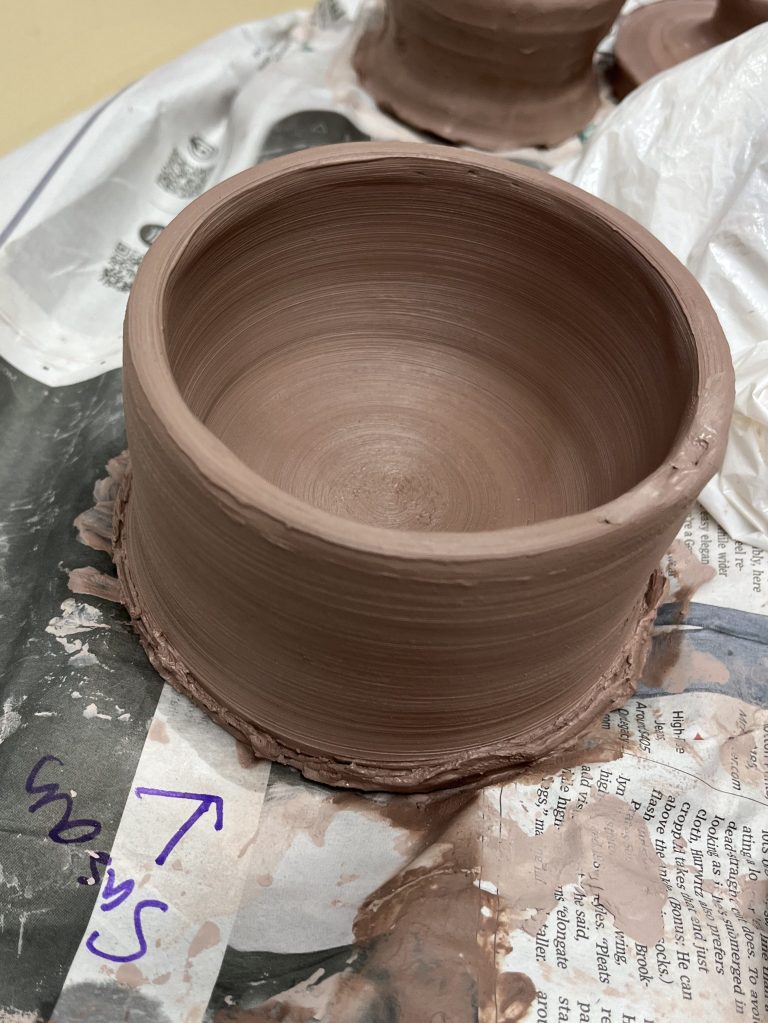
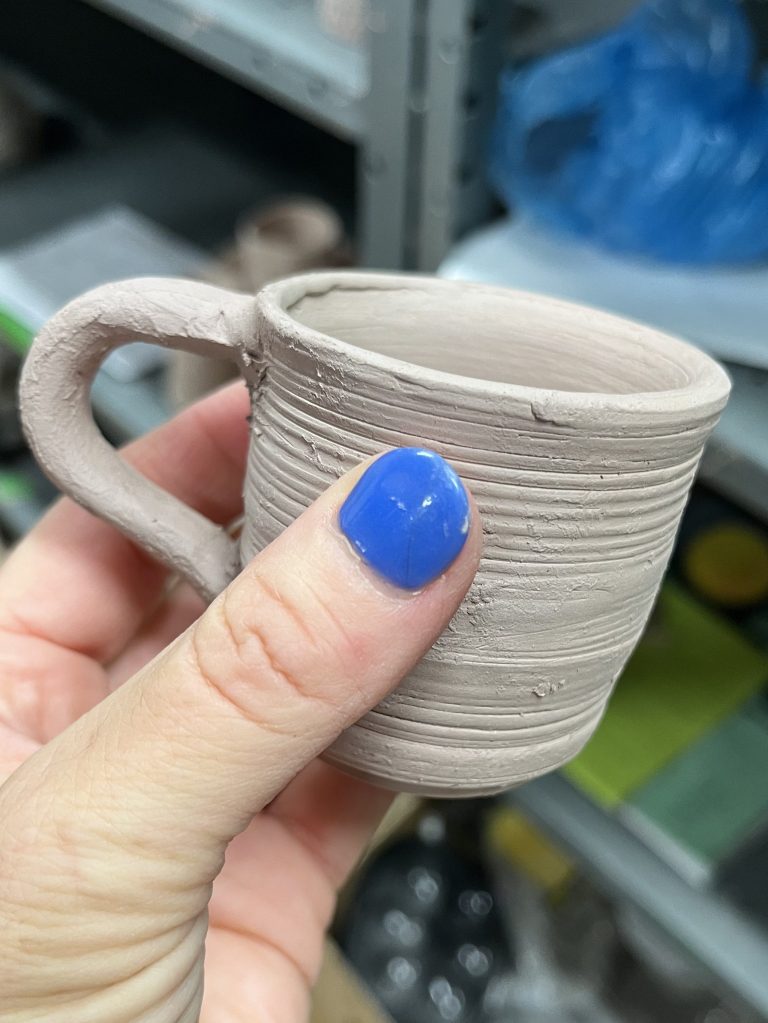
For the last few weeks I’ve spent two hours each Saturday afternoon at a beginning wheel throwing pottery class at an art center downtown. I signed up for the six week class because I wanted to try something new, do something creative, and connect with others in my community.
Taking this class has reminded me of what it’s like to be a learner and of some lessons we can take into our teaching:
First days can be scary. The morning before my first class I was so anxious. Even though the art center had done a good job explaining where to park, what to wear and what to bring, I was nervous. Now this may have just been me, but I wondered who would be in the class, what would the instructor be like, would I be able to do it? It wasn’t until class was underway that I was able to relax and enjoy.
Students want to know who their teacher is and be part of a community. We’ve had three different instructors, and they’ve all been great. While I don’t need to know every detail of their lives, it helps to hear a little bit about them. I like knowing how long they’ve been making pottery, what they like to make, etc. When the instructor shared that also encouraged others to talk and share. A classroom is a community and community is better when we know each other.
People learn in different ways. At the first class our instructor demonstrated how to use the wheel to center the clay, create a piece of pottery, and remove it from the wheel. It was a lot of steps and I found I couldn’t keep track of all the details – which tools to use when, what angles to hold my hands, what speed to use, etc. One demonstration was not enough to learn everything, so the instructor demonstrates every week and sometimes demonstrates multiple times in class when we have questions. And even though the demonstrations help me tremendously because I can get an idea of where I’m supposed to be going, I also need help from the instructor while I am creating. Even with all of that help, I think I would have also liked to have some written steps and/or pictures I could refer to when I was working independently. It made me think a lot about all the work I’ve been doing recently with Universal Design for Learning and providing students with options.
One opportunity isn’t enough to show what you can do or what you know. Recently I’ve been doing some work with district and school leaders about assessments and standards based grading. In pottery class, creating a piece of pottery was my goal (like a classroom standard). Yesterday when my piece collapsed just before I thought I was finished, I immediately thought “I’m glad I have another chance.” That led me directly back to the idea of how many chances we give our students to try, to fail and then to try again and how we measure those attempts. If I were only “graded” on the one piece that collapsed then I would lose all my motivation. I need multiple chances to show what I was learning. One try was not enough.
Nothing is perfect. Throwing clay has been a humbling experience. As someone who prefers to do things the “right way,” creating art has reminded me that that is not always possible or even the goal. Learning itself can be a goal. Having fun can be a goal. Getting out of your comfort zone can be a goal. And I can enjoy the process of creating and what I’ve created even when my results might not look even or perfect. Learning to accept, and even embrace, when things don’t go the way we thought they would is a lesson we can help our students learn as well.
As all educators know, teaching and learning are never too far from our minds no matter what we’re doing, but I promise I am having fun with the pottery class. It’s been great to get my hands dirty and do something so outside of my normal activities.
Last week we officially launched our district’s new instructional coaching team with a back to school professional development day. It was an incredible day of collaboration and learning. With intentional planning, we were able to help launch a new approach to teacher support in our district. Although we’ve just started with this team, we’ve been headed this way for years.
For over 10 years our district has had Digital Integration Specialists (DIS) who supported teachers with instructional technology and instructional planning. In the fall of 2013 when our district went one-to-one with digital devices in high schools, having coaches who could support this transition was an integral part of the plan. We added DISs in middle schools the following year (fall 2014). We also have had DISs in elementary schools before we had any at the secondary level (one elementary DIS supporting three schools).
I was one of our high school Digital Integration Specialists from 2013-2021. In the fall of 2021 I moved to my current role as the district Instructional Technology Specialist. For the last three years, I’ve worked closely with our district Coordinator of Instructional Technology, Carol Lunsford, to lead and support our team of 14 Digital Integration Specialists. I love this work!
In addition to working to support digital teaching and learning, we have also made sure to ground our team’s work in strong instructional practices. We have leaned into John Hattie’s research of effective instructional strategies including a strong foundation in Weston Kieschnick’s Bold School and ATLAS. We’ve also studied blended learning and Universal Design for Learning using a variety of resources from Catlin Tucker, Katie Novak and others. All of our Digital Integration Specialists also go through Cognitive Coaching training during their first year on our team.
New Year, New Team
Last spring our team learned that for the 24-25 school year we would officially transition from a digital focus to a broader instructional focus and rename our positions “Instructional Coaches.” We also got to welcome our district’s three Academic Interventionists to this coaching team.
For our first official PD with this new team, Carol and I knew we wanted to focus on building relationships and understand this new role. We wanted to build on the extensive experience this team of 17 coaches already has and help prepare them for what coaching could look like in their buildings this year.
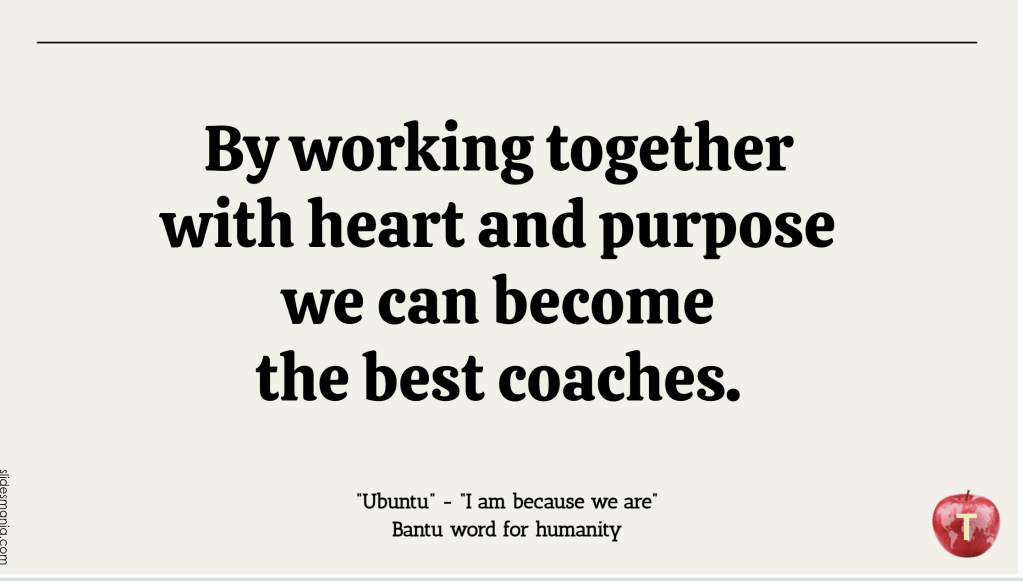
We intentionally chose to focus on a concept our Superintendent, Dr Akil Ross, had shared with our administrators at our back to school “Nuts and Bolts” the week before – “I am because We are.” Dr Ross shared that our district-wide theme for this year will be “Growing Together” and that we are more powerful when we work together to face whatever challenges come our way.
For our PD day, after some relationship building activities and creating our team’s Social Contract (Capturing Kids’ Hearts) we moved into the focused “Coaching Corner” PD portion of the day. Our grounding (transitional) phrase was “By working together with heart and purpose we can become the best coaches,” and we connected everything to that statement.
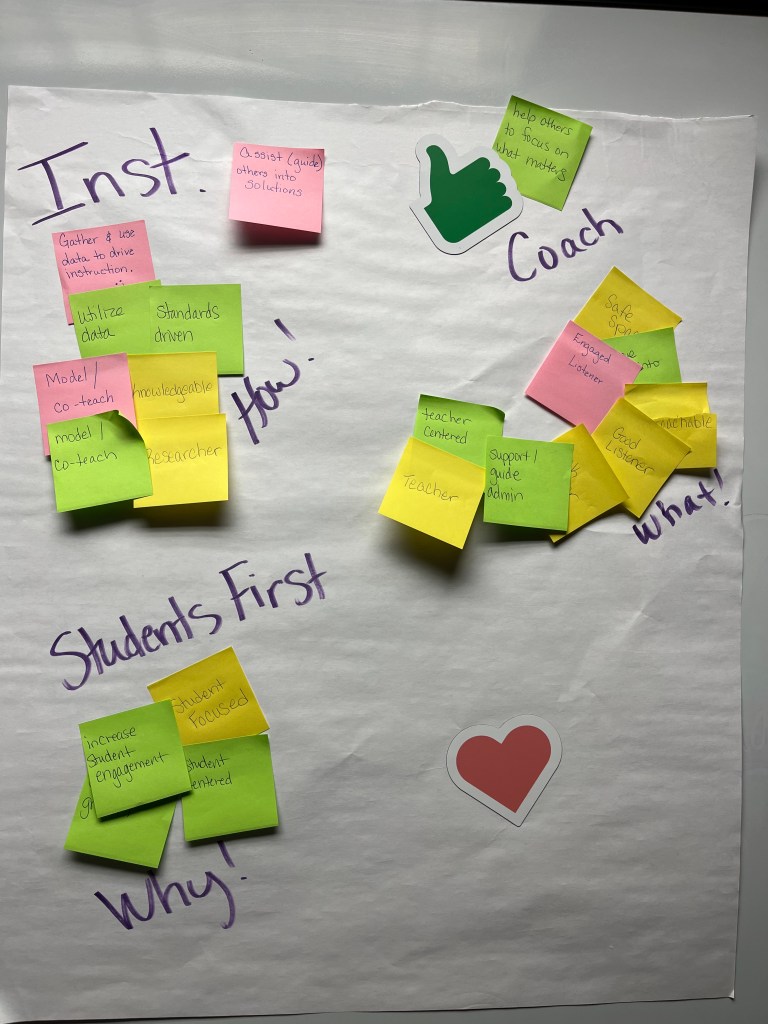
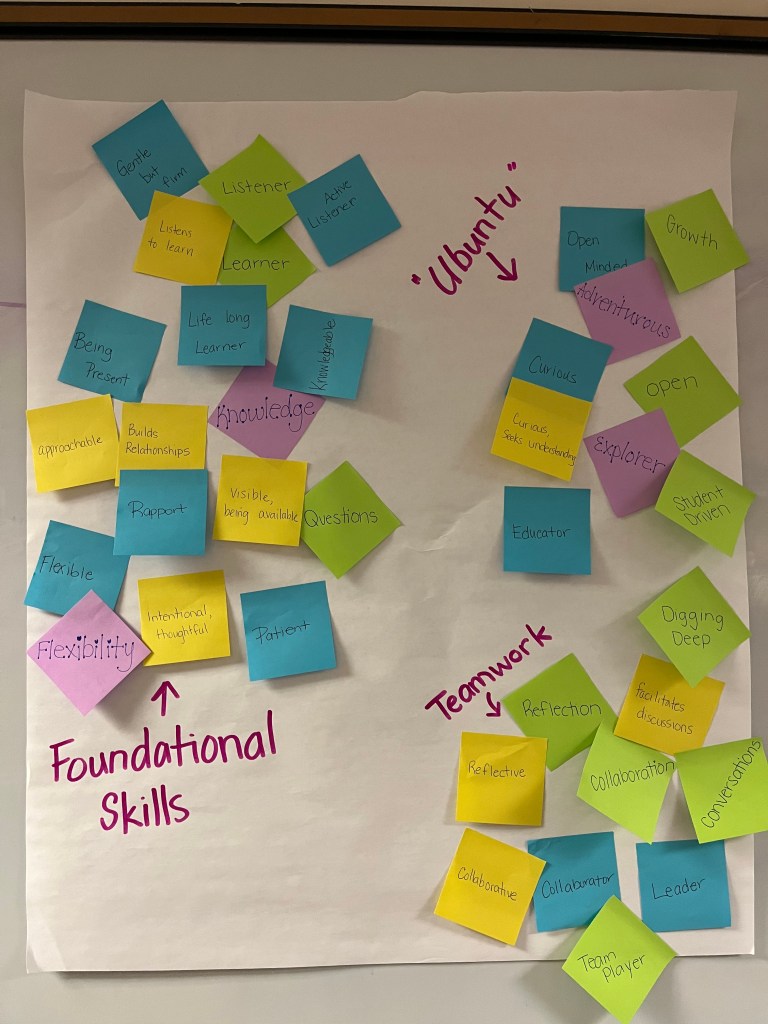
The coaches used Affinity Mapping to help gather and organize our collective knowledge about coaching using the prompts: What is an academic coach (Instructional Coach/ Academic Interventionist)? What makes a successful academic coach? They independently brainstormed, then collectively reviewed the ideas to gain insights into the themes/areas of coaching. I appreciate the wealth of experience our coaches brought to this activity and their understanding of the many pieces involved in being a successful coach.
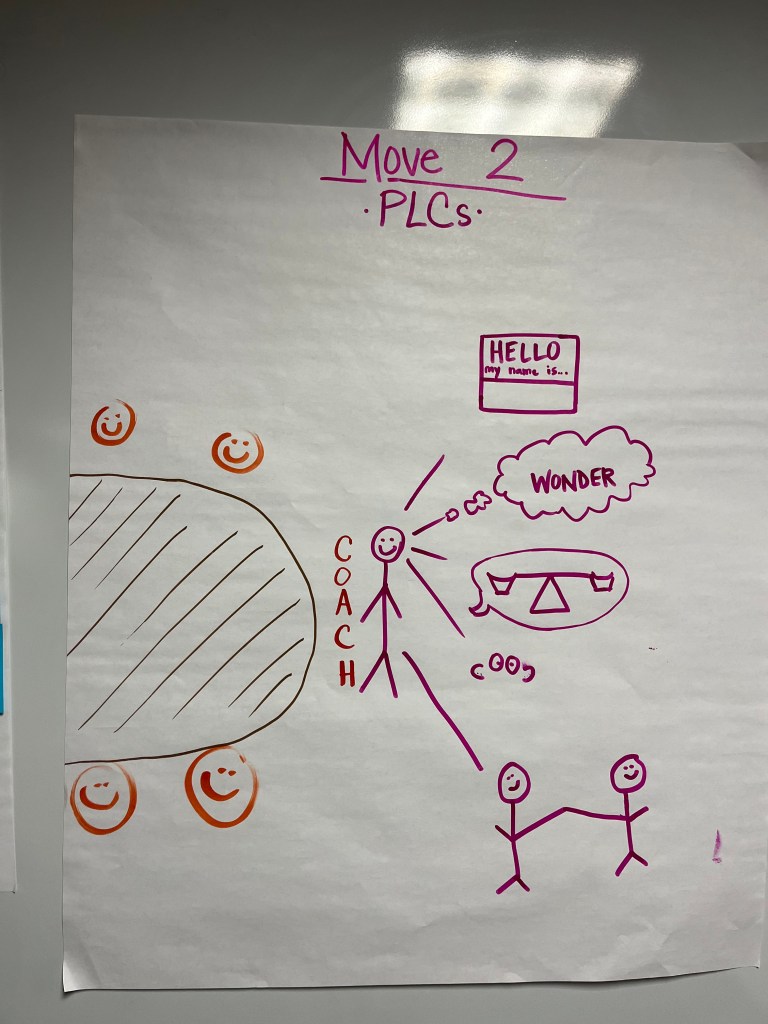
We then moved into a modified jigsaw using the first section of Moves for Launching a New Year of Student-Centered Coaching by Diane R. Sweeney, Leanna S. Harris, and Julie Steele. We used this book two years ago, but felt like it was important to revisit because of its laser focus on the start of school and because we have many new members on our team. Each group created a visual that we would be able to display in our teacher training center and revisit as needed.
The next part of our “Coaching Corner” came from a session I attended at ISTE in June. While at ISTE I attended a variety of sessions related to instructional coaching hoping to gather ideas for this new team. One was called “Pitch Perfect Coaching: Mastering the Elevator Speech to Rock Their Role” presented by fellow ISTE Certified Educator Jennifer Graham (@jlg523) from North Carolina. I contacted Jennifer after ISTE to ask if she’d be willing to let us adapt her presentation. I love how educators are willing to share what they do to help others! Using that modified presentation, our team walked through the steps of creating “concise and engaging” speeches they could use with teachers, administrators and others as they head back to school.
The rest of our day included updates from district content coordinators and specialists (math, ELA, science and social studies), grade level collaboration, developing coaching schedules and resources as well as covering our own “Nuts & Bolts” of back to school items.
The whole PD day was filled with positive sharing and excitement about what our new team will be able to do to support teachers in our schools.
I can’t wait to see how our #D5Coach team exemplifies “Growing Together” this year!
This June I had the privilege of presenting at the annual ISTE Conference for the first time and I loved it!
If you’ve ever thought about applying to present at an ISTE Conference – I want to encourage you to go for it. Let me share a little about my experience applying and presenting.
Every summer, ISTE (International Society for Technology in Education) hosts an annual conference for educators from around the world. The conference is huge with an amazing number of different types of sessions: Main stage, Panel, Poster, Research Paper, Playground, Campfire, Interactive and more!
The application for presenting at ISTE is extensive. When you apply, ISTE requires that you share your plan for every aspect of your presentation including intended audience, attendee devices, purpose, objective and supporting research. The application also requires that you clearly indicate which of the ISTE Standards your session addresses and include a complete outline of the session.
I chose to present on a topic I’m passionate about: Universal Design for Learning (UDL). UDL helps address the Student Standards especially Empowered Learner and Creative Communicator. UDL also requires teachers to be effective, proactive Designers of learning experiences (Educator Standards).
With my ISTE Standards and topic chosen, I took time to plan the details of the presentation. I called it “UDL in Action the K-12 Classroom” because I planned to share specific examples from teachers and classrooms in my district. I chose to submit the session as an “interactive session” format. I decided to use the ATLAS model by Weston Kieschnik to organize my presentation because ATLAS focuses on engagement and outcomes. I wanted my attendees to actively participate and walk away with something they could use back in their schools. Then I chose the digital tool that would support my goals: Lumio by SMART. Lumio would allow my audience to participate and for me to get feedback from them throughout the session.
Although the application was extensive, it made it so much easier when the time came to actually put my presentation together and get ready for the conference: the plan was already made.
Conference Time
ISTE does a wonderful job of taking care of the presenters before and during the conference. The communication about the conference ahead of time was clear and helpful.
At the conference, I loved that there was a presenter’s room where I could test the presentation setup the day before my session. I was able to test the audio and video. Just knowing what I would expect the next day helped me feel more relaxed about presenting.
On the morning of my presentation I had two different ISTE technology helpers check to see if everything was working and to make sure I was ready to go – another great ISTE support.
I had an 8:30 presentation and was able to get into the room about 45 minutes early to set up. This allowed me to be ready when people started to arrive. I was able to ask them about their role in education and why they’d chosen to come to my session. I love making those connections before and after a presentation.
I also laid out the UDL bookmarks I had made. These contained a QR code and shortened URL to my session resources and to the interactive Lumio presentation. On the other side of the bookmark, I had included one of the three UDL areas (Engagement, Representation, Action & Expression) and the corresponding guidelines and checkpoints.
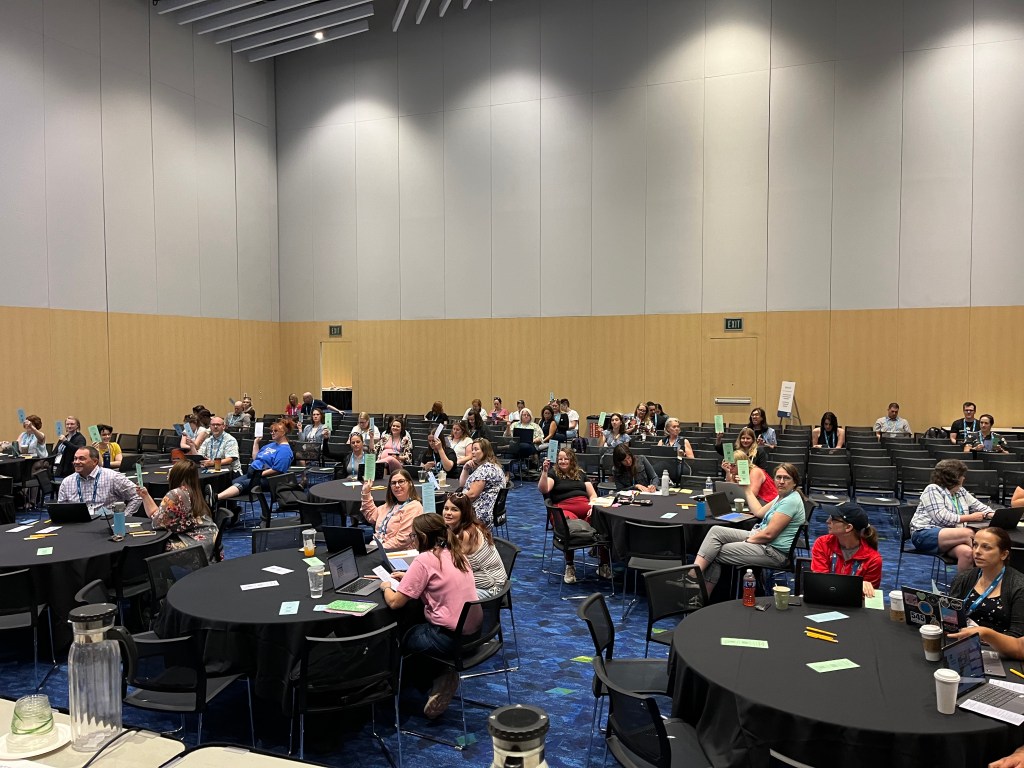
The session went well and I loved how much everyone actively participated. I had built in different types of interaction. Early on I gathered information about their experience with UDL as well as Lumio.
Throughout the presentation as I shared different examples of “UDL in action,” attendees had a variety of ways to identify which of the UDL guidelines these examples included. They could talk to a neighbor, hold up their UDL bookmark, and/or give digital input via the Lumio presentation. Attendees seemed to enjoy interacting in different ways and that they were able to see the slides on their devices via Lumio.
When the presentation was over, several people came up to talk to me and ask more questions – I always consider that a marker of a successful presentation.
I loved presenting at ISTE and sharing my love of UDL and what a difference a UDL mindset and approach can make for all learners.
When applications open for ISTE 2025, I hope you’ll consider sharing the passion and knowledge you have with others. If you want to know more, just reach out!
ISTE certainly knows how to make people feel special!
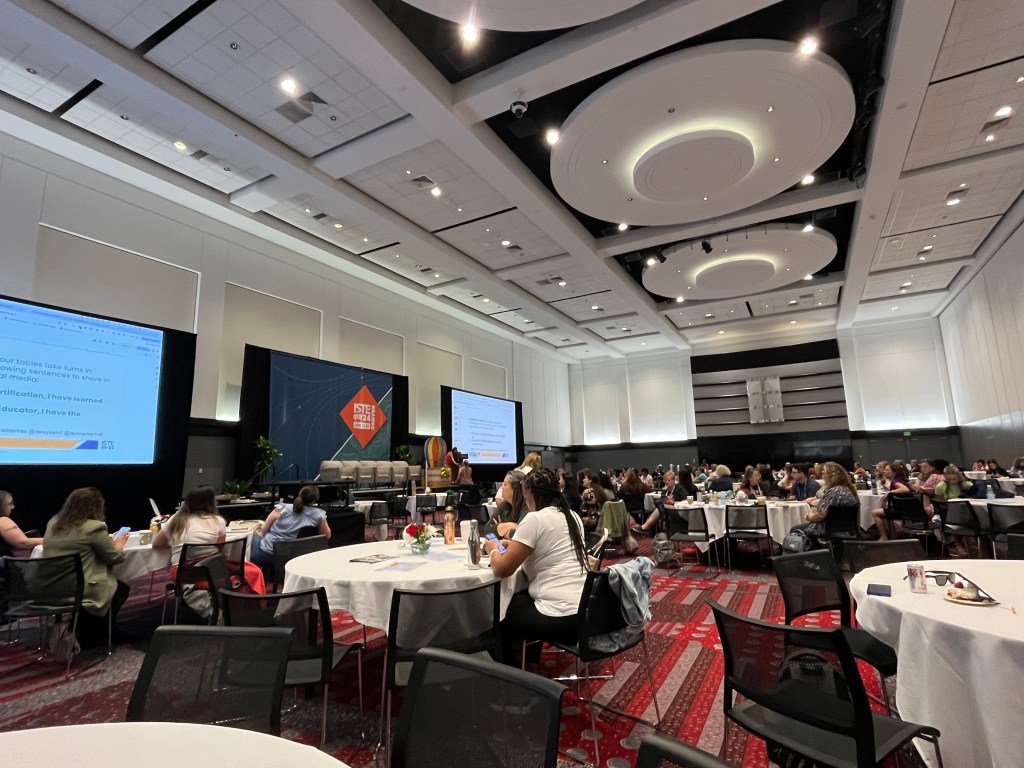
Last month I attended my second ISTE conference and my first as an ISTE Certified Educator.
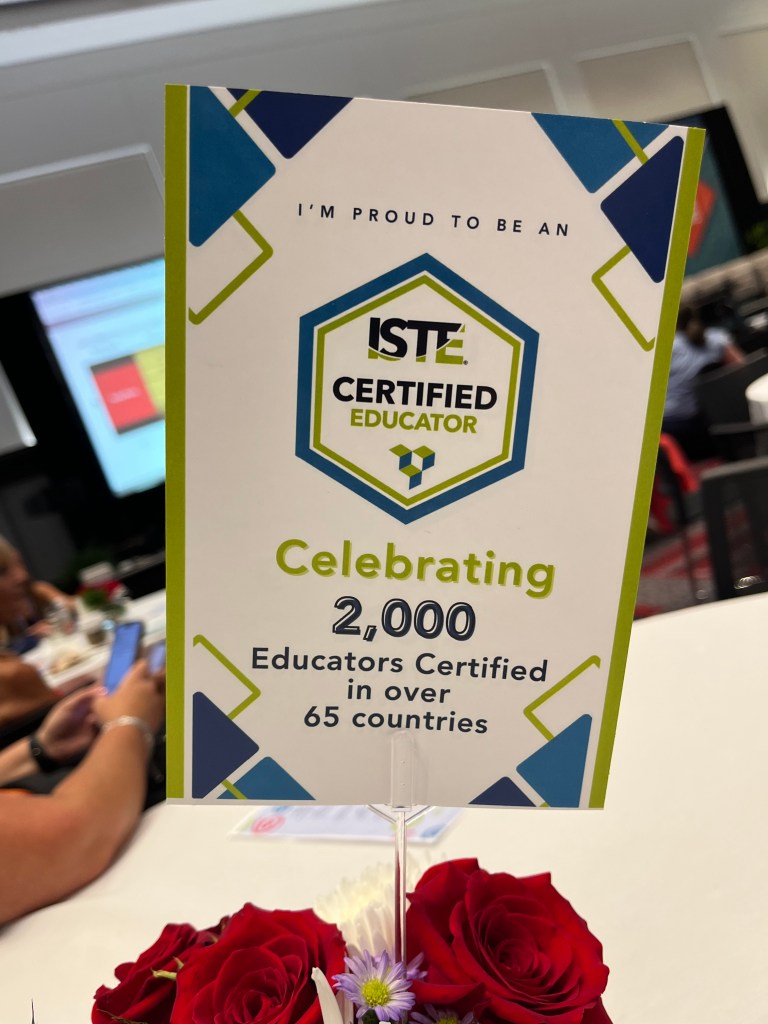
From a special registration line to a wonderful breakfast community event, the ISTE Certified Educator staff did an amazing job of celebrating us.
I definitely felt appreciated and am honored to be one of the 2,000 ISTE Certified Educators – #ISTEcert.
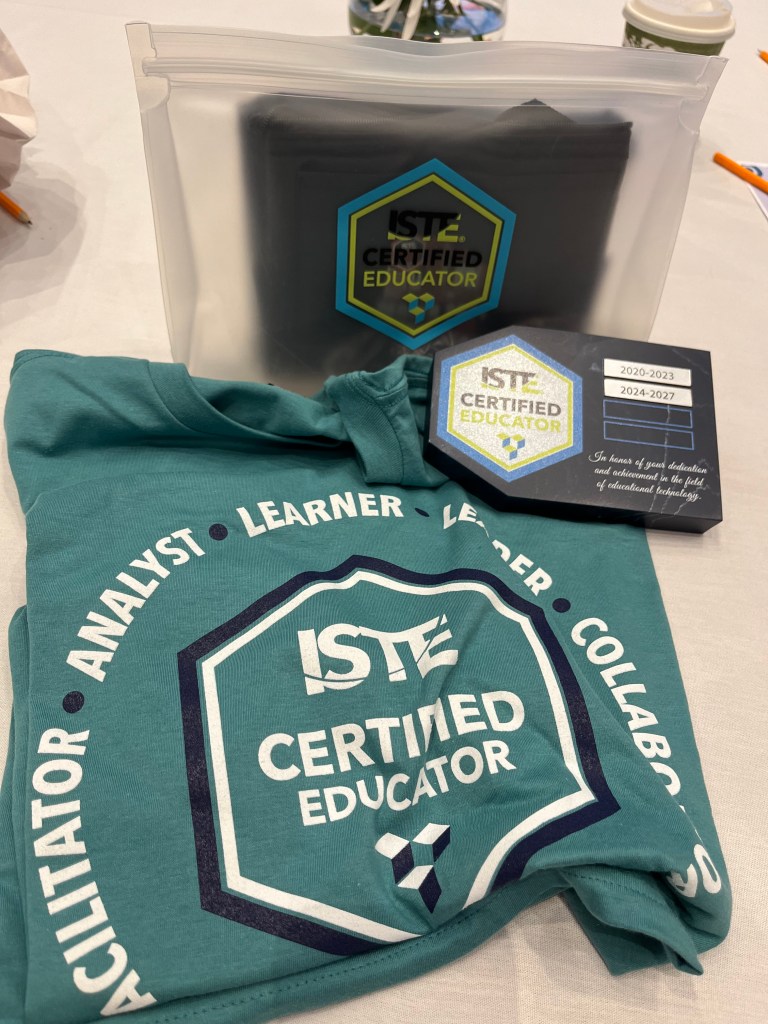
I became an #ISTEcert in 2020, but this was my first in person ISTE event since then, so I was also able to finally get my ISTE plaque. TSA did have questions about a large heavy stone object in my bag, but it was worth it!
This was also my first ISTE Conference as a presenter – definitely a highlight! While I’ll need another blog entry to talk about that, I need to mention it here. Being an #ISTEcert at an ISTE Conference was extra special. ISTE made sure to connect with us ahead of time and they identified our sessions in the program. I also loved having some #ISTEcert attend my session and attend those led by other #ISTEcert.
Another #ISTEcert highlight for me was finally meeting Carmelita Seitz! Carmelita is the ISTE Certification Director. I have been in MANY online meet-ups with her over the last four years and have always appreciated her enthusiasm and professionalism. Carmelita makes sure the #ISTEcert community is connected and supported. We’re given a chance to learn from each other: one of the many reasons it’s great to be an ISTE Certified Educator.
I also loved that we had specials purple lanyards that helped us find each other at the huge conference of over 16,000 people. I was able to connect with#ISTEcert I’d seen at other conferences like Debbie Tannebaum from VA. I also met many “new-to-me” #ISTEcert like Lauren Boucher from NC. Lauren and I stood in a long line together and had a chance to talk about what education and professional development look like in our different locations. I always walk away from these types of conversations with at least one “nugget” to ponder and consider bringing back to my work.
I am thankful that ISTE offers a certification focused on how educators can be their best for students. The initial training is collaborative and the portfolio is challenging. The ISTE Certification process isn’t easy, but it is worth it. The whole process made me incredibly reflective about the work I do and forced me (in a good way) to really dig into the ISTE Student Standards. If you’re interested in learning more, I encourage you to go to the ISTE Certification website or connect with an #ISTEcert (like me!).
Ever since I became an instructional technology coach, I have loved helping teachers integrate technology into their lessons and learning. But in the early years of this work, one of the issues I faced was helping teachers focus on the “why” behind using technology. We also struggled with equity and effectiveness of technology usage. I knew there had to be more out there, so I started researching. In my research, I learned about SAMR, TPACK, AZ Technology Integration Matrix and the ISTE Standards as ways to frame and inform our technology use.
But through this research, I also discovered Universal Design for Learning (UDL) and I was hooked! Like so many educators, I am passionate about making sure all students have access to a quality education. In the last two years, I have chosen to take a deeper dive into UDL to see how it can help our teachers reach all students. I’ve read books and articles, attended webinars, and recently written and taught a graduate class on UDL for educators in our district.
I believe UDL is something that can help all teachers and students if we understand what it is and what it looks like in the classroom.
What is UDL?
Universal Design for Learning (UDL) is a framework for designing instructional materials, activities, and environments that enable all students to engage and participate in the learning process, regardless of their abilities or disabilities. UDL is based on the principles of accessibility, flexibility, and diversity, and aims to provide equitable learning opportunities for all students. (ChatGPT, Mar 2023*)
“Variability is the rule, not the exception. Learners may need to learn in different ways, using different materials, to reach the same goals.”
“All students can work toward the same firm goals and grade-level standards when provided with conditions of nurture and adequate support.”
“All learners can become expert learners if barriers are removed”. (p.22)
UDL focuses on developing students as Expert Learners who are:
Purposeful & Motivated (Engagement)
Resourceful & Knowledgeable (Representation)
Strategic & Goal-Oriented (Action & Expression)
Students will not know how to do everything, but we need to help them empower themselves as learners. An important part of that is removing barriers and recruiting students as partners in their learning.
When I want to use the UDL guidelines, I find these three questions from UDL Now! helpful:
“What is it that all learners need to know or be able to do?”
“Based on variability, what barriers may prevent students from learning?”
“How do I design flexible pathways for all learners to learn and share what they know?” (p. 26)
By asking these questions, and reviewing the core beliefs and guidelines, teachers can bring the UDL framework into their classrooms so that all students will benefit.
What Does UDL Look Like in our K-12 Classrooms?
In the K-12 education system, UDL can be applied in all grade levels and content areas to ensure that every student has access to the same high-quality educational experiences and opportunities to succeed. By applying UDL principles in the classroom, teachers can create learning environments that meet the needs of diverse learners, including those with disabilities, those who are culturally and linguistically diverse, and those who are gifted and talented. (ChatGPT, Mar 2023*)
Multiple Means of Engagement means that teachers provide students with opportunities to actively participate in the learning process and engage with the material in meaningful ways. By providing multiple means of engagement, the teacher ensures that all students have the opportunity to participate and learn in a way that is meaningful and relevant to them. (ChatGPT, Mar 2023*)
Math class example: a teacher provides students with a problem-based learning activity where they work in small groups to solve real-world math problems. A teacher provides students with manipulatives and real-world examples to help them understand mathematical concepts.
Social Studies class example: a teacher uses NewsELA (or other resource) to provide students with multiple ways to access the same text (in the example below, an article about Rosa Parks). NewsELA allows for various ways to access the material: the lexile level can be changed, students can have the article read aloud, the article can be read online or printed.
General example: teachers encourage students to set learning goals that align with course standards and to frequently reflect on their learning. In the example below, the teacher uses a template from kamiapp.com and students may respond with text, audio and/or video.
Multiple Means of Representation means that teachers provide students with information in different ways, such as through visual, auditory, and kinesthetic modalities. By providing multiple means of representation, the teacher ensures that all students have access to the information and can learn in a way that works best for them.(ChatGPT, Mar 2023*)
Science class example: a teacher provides students with a visual diagram of a cell, a recording of a lecture about cell structure, and a hands-on activity where students create their own model of a cell.
Social Studies class example: instead of having all students read one specific article to learn about a topic, the teacher provides multiple written, oral, and video options. Students select the options that work best for them. In the 8th grade example below, the teacher gathered resources so that the students would have reputable sources to begin with. The students also have the options of gathering additional resources as appropriate.
General example: a teacher chooses online resources that have Immersive Reader (to read texts aloud) and Closed Captioning embedded. These tools can help students who may need them (IEP, MLL, auditory issues, etc.), but can also help students who may prefer to learn with those tools.
Multiple Means of Action & Expression means that teachers provide students with multiple ways to demonstrate their learning and knowledge. By providing multiple means of action & expression, the teacher allows students to showcase their knowledge and skills in a way that is meaningful and authentic to them. (ChatGPT, Mar 2023*)
Science class example: to demonstrate their understanding of the cell cycle and mitosis, a teacher provides students with options for how to show what they know. In the high school biology class example below, students can create a map, brochure, son, book, story, essay or board game. Students have their choice of format. The teacher shares a rubric ahead of time so that students know how their creation will be evaluated.
General example: students need to create a multimedia presentation for a class, but the teacher allows the students to choose which technology tools they’ll use to create the presentation instead of requiring them all to use one specific tool. Some students create videos with Adobe Spark or Screencastify, some create infographics with Canva and some create presentation slides in Google Slides or Prezi.
General example: a teacher encourages students to self-reflect and create their own action plan and timeline for completing a project.
English class example: after reading a short story, a teacher gives students a choice board of activities. Some of the choices require writing, some require using images and writing, some allow students to use voice to text to create their answers. In the example below from Kate Mewborne at Dutch Fork High School, each student completes their work inside a Google Slide deck template, but has choice in which options to choose and how to complete them as long as they are meeting the associated standards.
Where to Start?
I hope that the examples above give you some ideas on where you might want to start or grow your implementation of the UDL guidelines. As you can see, providing and encouraging student choice is important. Student choice is a great way to start implementing UDL. Ask yourself, did my students have a choice in their learning at any point in this lesson? You can read more about choice in my fall blog post: One Size Does Not Fit All: How to Honor Learner Choice
I wish you luck on your UDL journey. I hope you’ll share your journey with others in your building and beyond. We have so much we can learn from each other.
About the Author:
Susan Aplin is a Google Certified Trainer and ISTE Certified Educator who serves as the district Instructional Technology Specialist for School District 5 of Lexington Richland County. Her goal is to support and lead educators in authentic technology integration that helps teachers and students meet instructional goals. Connect with Susan @AplinEDU.
Want to learn more about UDL? Here are some essential resources:
* Author’s note: As you can see from the text above, I used ChatGPT to help me write some of the definitions for this post (sections in italics). It’s exciting to explore how this AI can help us with various types of writing. It is important to learn how to use this and other AI tools with discernment.
Think back to the last time you wanted or needed to learn something. Maybe you had to fix a broken garbage disposal. Or maybe you were looking to learn more about a place you might visit over spring break. How did you go about learning what you needed to know? Did you search online? Did you ask someone who might know more about it than you do? Did you read an article or a book? Did you learn with a friend or on your own? Did you watch a video or listen to a podcast?
If you were able to fix that garbage disposal or plan that spring break trip, did howyou learned that information affect your outcome? I think the answer is both no and yes.
No, because you met your goal. It did not really matter how you got there. How you learned was not the most important part of the process.
But how you chose to learn did affect your outcome because you learned in a way that met your needs. You found a way that worked for you. You might have even consulted many resources in order to get the information you needed. Having that choice helped you meet your needs.
So how do we bring that natural approach to learning into our schools? How do we allow students and teachers choice and options in their learning?
What we learn:
We have to start with the end in mind: the goals or objectives. What do we want students or teachers (our learners) to know? What important concepts or ideas do we need to make sure they understand? What skills do they need to learn? Sometimes even the goals themselves can be determined with the help of our learners. When our learners are involved in setting the goals, their investment and engagement will be higher.
Unfortunately, choices are not something that all of our learners get to make. We often give students only one way to show what they know such as a test or a specific project. We often give teachers one way to learn such as attending a meeting or reading an email.
While we cannot always offer our learners choice in what they learn, we can look for opportunities to offer them choices of how they learn and how they show us what they know. These are two of the best ways to increase learner choice in our schools.
How people learn:
With the plethora of resources available, there have never been more options for how people learn. They can watch a video/webinar, read online, play a game, listen to a resource, talk to an expert, etc. They can work independently, with another learner in the building, or with another learner online.
When creating learning opportunities, consider offering the following choices when possible
Whole group, small group and individual work
Online and in person
Self-paced resources
Video and audio
Digital and print
Starting small is fine and often works best. If your learners are not used to having many choices, then too many choices can be overwhelming. For the first time out, maybe you offer an article and a video on the same topic. They can learn from either one.
A Teacher Choice Example:
Last year one instructional strategy our district focused on was feedback. According to Hattie Ranking: 252 Influences And Effect Sizes Related To Student Achievement, feedback has an effect size of .70. Therefore, we knew that improving our use of feedback should be a goal for all teachers. As we considered how to offer professional development related to feedback, we knew teachers had different needs and different levels of experience with feedback. Instead of offering a one size fits all PD session, we worked together to provide options. We had live online sessions (synchronous) as well as self-paced options (asynchronous). We had options for best practices with specific feedback tools, such as Pear Deck and EdPuzzle, as well as options for content specific learning such as Math, English, Science, etc. With the choices provided, teachers were able to learn about something relevant to their work and learn in a way that worked best for them. Our PD feedback confirmed that offering these choices increased the likelihood the teachers would implement what they learned.
How people show what they know:
Instead of all learners producing the same artifact to show what they know, we need to allow our learners to demonstrate their growth in a variety of ways.
Can they write an essay, fill out a form, or take a test? Of course. But can they also create a podcast, video, presentation, or infographic? Absolutely!
A simple choice board or learning menu is an effective way to offer our learners choices in how they show what they know. There are many resources available to help you get started. Education leaders such as Catlin Tucker, Matt Miller, Eric Sheninger, Kasey Bell, and AJ Juliani have blogs and additional resources you can use as samples. I’ve gathered those and many others in a Choice Boards & Learning Menus Wakelet Collection.
The formatting of the choice is not as important as making sure the choices connect back to the goals and objectives and that there is true variety in the options. Learners also benefit from having time to reflect on their learning and the choices they made.
Looking ahead:
When we don’t offer choice to students and teachers, we miss opportunities for empowerment. We take away their autonomy and chances for them to self-assess and grow.
As you plan your next lessons or professional development opportunities, think about how you can provide choices for your learners and what a difference that might make. One size learning does not fit all learners.


















 Reflections of an Instructional Coach